


203 deaths in Karnataka in 4 years: Human-animal conflict is increasing
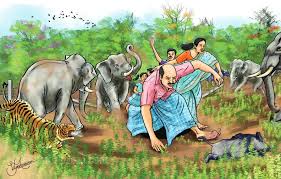
Human-animal conflict has increased significantly in Karnataka, leading to the deaths of 203 people from 2022 to November 2025. Wild animal attacks have increased in four districts including Chamarajanagar and Kodagu. Wild animal attacks have increased in these districts for the last four years, and the list of deaths has been revealed.
Bengaluru, December 23: Man-Animal Conflict has been increasing in recent days, with hundreds of people dying in animal attacks in many parts of the state. While people are destitute due to elephant attacks in Kodagu, the forest department is struggling to catch the pack of tigers that have made their home in Chamarajanagar. Meanwhile, the figures of those killed in animal attacks in the state have been revealed, shocking humanity.
How many deaths have been reported in each district?
In the last four years, the number of wild animal deaths has increased in Mysore, Chamarajanagar, Kodagu and Hassan districts, with about 60% of the deaths being due to human-wildlife conflicts. As revealed by Forest Minister Ishwar Khandre, 203 people have died in human-animal conflicts in the state from 2022 to 2025 (November 30). Out of which 58 people died in 2022-23, 65 in 2023-24, 46 in 2024-25 and 34 people died till November 2025.
With 40 deaths in four years, Chamarajanagar district tops the list of statistics, while Kodagu is second with 32 deaths. Mysore is next with 25 and Hassan is next with 19 deaths.
What are the reasons for human-animal conflicts?
These districts share extensive boundaries with ecologically sensitive areas, including the Bandipur-Nagarhole-Wayanadu-Mudumalai landscape, the largest forest area in South India. Human habitation on the fringes of the forests of South Karnataka is said to be adjacent to wildlife habitat, which is why human-animal conflict has occurred and deaths have occurred.
Forest officials say that the death toll is increasing due to factors such as habitat fragmentation, shrinking forest corridors, agricultural expansion and human encroachment on wildlife habitats. In this case, environmental conservation experts suggest that restoring wildlife corridors and conducting continuous community awareness programs along with scientific land use can prevent this problem.
It is during this period that the number of animal attacks is highest
According to these figures, elephant attacks have caused the most deaths, while tigers and leopards have also killed hundreds. It is learnt that most of the animal attacks have taken place while farmers are working in the fields, collecting forest produce or moving in forest areas. Such incidents mostly occur in the early morning or evening hours. The forest department has reportedly taken several precautionary measures, including installation of solar-powered fences and elephant-proof ditches.
You Might Also Like
-
RSS Chief Mohan Bhagwat visited the Sapta Go Pradakshina Shala in Tirupati today. He explained th...
-
The idea that bulls dislike the color red and attack because of it is just a misconception. Like...

Leave A Comment










Comments